
The Nilgiri Hills, or the “Blue Mountains,” form a majestic highland plateau at the junction of the Western and Eastern Ghats. As a UNESCO-recognized biodiversity hotspot spanning Tamil Nadu, Kerala, and Karnataka, this region is a sanctuary for extraordinary life forms, many of which are found nowhere else on Earth
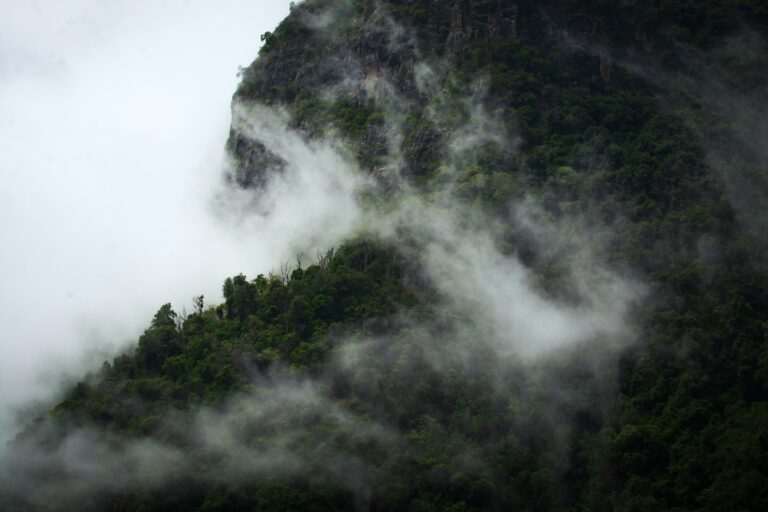
The Nilgiris, also called the Blue Mountains, are one of the most beautiful and biologically rich regions in India. Located in the Western Ghats, this region is a global biodiversity hotspot.
The Nilgiri Biosphere Reserve (NBR) covers approximately 5,520 km2 with an altitudinal range from 250 m to 2,650 m. This dramatic elevation gradient creates a mosaic of ecoregions, from tropical thorn scrub on lower rain-shadow slopes to the iconic montane shola-grassland complexes above 1,500 m
The Nilgiris are not just visually stunning—they are one of the most botanically rich landscapes within the Western Ghats. The region supports an extraordinary diversity of plant life, shaped by altitude, climate, and isolation over thousands of years.
What makes Nilgiris flora remarkable is its diversity, endemism, and ecological precision. From dense evergreen forests to wind-swept grasslands, each plant community is uniquely adapted to its environment.
The Nilgiris host multiple vegetation types, each with distinct plant communities:
Evergreen forests with dense, moisture-rich vegetation and species like rosewood and wild fig
Deciduous forests with seasonal leaf-shedding trees such as teak and Terminalia
Montane grasslands dominated by native grasses and flowering herbs
Shola forests, compact evergreen patches nestled in valleys
Together, these systems create a continuous and interconnected plant network, supporting long-term ecological stability.
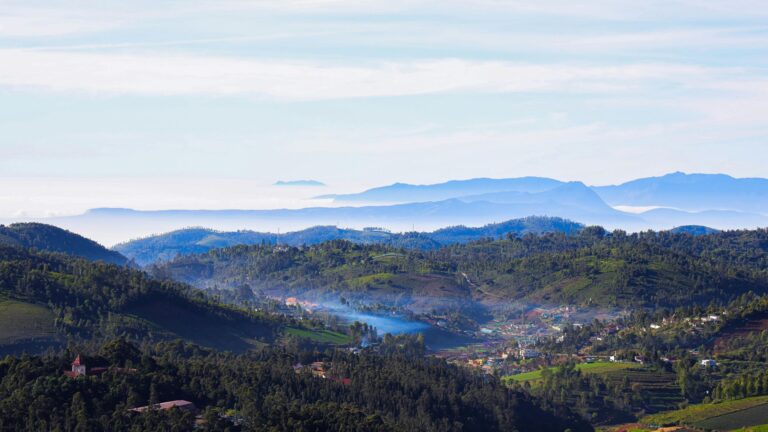
Shola forests are the ecological backbone of the Nilgiris. These are stunted, evergreen forests nestled in valley folds, surrounded by rolling grasslands. At first glance, they appear dense and impenetrable—but inside, they are humid, dim, and intensely alive.
Short, gnarled trees with thick canopies
Moss-covered trunks and lichen-rich bark
High moisture retention, even in dry seasons
Acidic, humus-rich soil
Rhododendron arboreum nilagiricum – A high-altitude variant, adapted to cold and wind
Michelia nilagirica – A rare magnolia relative with fragrant flowers
Syzygium species – Wild relatives of jamun, crucial for bird ecosystems
Ilex denticulata – Evergreen shrubs that thrive in low-light conditions
Shola forests act as natural water reservoirs. Their sponge-like soil absorbs monsoon rainfall and releases it slowly, feeding rivers like the Bhavani and Moyar. Without sholas, the hydrology of southern India would collapse.
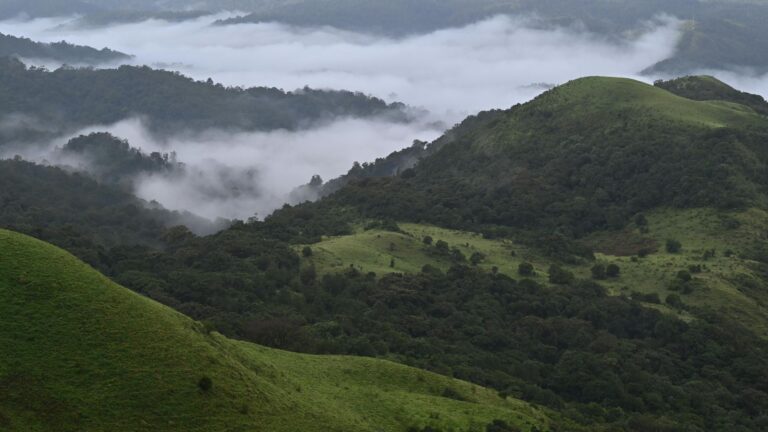
Often mistaken as degraded forest land, Nilgiri grasslands are actually ancient ecosystems. They coexist with shola forests in a symbiotic relationship.
Dominated by hardy grasses like Chrysopogon and Themeda
Subject to seasonal fires (natural and anthropogenic)
High exposure to wind and UV radiation
Prevent soil erosion on slopes
Support endemic herb species
Act as carbon sinks
Provide grazing grounds for native fauna
The shola–grassland system is a climatic equilibrium. Remove one, and the other destabilizes.
The Nilgiris are a cradle of endemism—species found nowhere else on Earth. Geographic isolation, combined with stable climatic conditions over millennia, allowed species to evolve independently.
Strobilanthes kunthiana (Neelakurinji)
Blooms once every 12 years, carpeting hills in blue—a phenomenon tied to synchronized mass flowering.
Impatiens species (Balsams)
Highly localized, often restricted to specific altitudes or slopes.
Hedyotis and Sonerila species
Small, delicate herbs adapted to moist rock surfaces.
These plants are not just rare—they are ecological specialists, finely tuned to niches that barely exist elsewhere.
For centuries, indigenous communities like the Todas, Kotas, and Badagas have interacted with this flora—not as resources to exploit, but as systems to understand.
Berberis tinctoria – Used for anti-inflammatory treatments
Gaultheria fragrantissima – Source of wintergreen oil (analgesic properties)
Solanum species – Used cautiously in traditional remedies
This knowledge is not documented in textbooks—it is lived, oral, and increasingly at risk of disappearing.
The most immediate threat to Nilgiri flora is not deforestation—it is ecological replacement.
Eucalyptus globulus – Introduced for timber; drains groundwater and suppresses native growth
Acacia mearnsii (Black Wattle) – Aggressive spreader, outcompetes native species
Lantana camara – Forms dense thickets, blocking sunlight and regeneration
These species alter soil chemistry, disrupt fire cycles, and dismantle the delicate shola–grassland balance.
The Nilgiris operate on narrow climatic thresholds. Even slight changes in temperature or rainfall patterns can trigger cascading effects.
Shifting flowering cycles
Reduced regeneration of endemic species
Increased frequency of forest fires
Drying of high-altitude wetlands
Unlike adaptable lowland forests, montane ecosystems have limited migration space. When conditions change, species don’t move—they disappear.
Protected areas like Mukurthi National Park and Silent Valley have slowed degradation, but challenges remain:
Plantation expansion continues in buffer zones
Tourism infrastructure fragments habitats
Local ecological knowledge is underutilized
Removing invasive species
Reintroducing native flora
Rebuilding shola–grassland linkages
If the flora of the Nilgiris forms its foundation, the fauna is its movement—its pulse, its tension, its raw expression of survival. Every valley, grassland, and shola patch is not just inhabited, but contested. Life here does not exist in isolation; it exists in a continuous negotiation between predator and prey, adaptation and extinction.
The Nilgiris are not a sanctuary in the romantic sense. They are a system where every organism is under pressure—to evolve, to compete, or to disappear.
The Nilgiris sit at a biological crossroads within the Western Ghats, linking multiple ecosystems across southern India. This makes the region a faunal convergence zone, where species from different ecological backgrounds overlap and interact.
High species density across mammals, birds, reptiles, and amphibians
Strong presence of endemic and endangered species
Complex food webs shaped by altitude and vegetation
This is not just biodiversity—it is layered biodiversity, where multiple trophic levels are tightly interdependent.
At the top of the Nilgiri food chain are apex predators—organisms that regulate entire ecosystems through presence alone.
Bengal Tiger (Panthera tigris tigris)
A territorial predator requiring vast hunting ranges. Its presence indicates a healthy prey base and intact habitat.
Indian Leopard (Panthera pardus fusca)
More adaptable than the tiger, capable of surviving closer to human settlements. A silent opportunist.
Dhole (Cuon alpinus)
Highly social wild dogs that hunt in coordinated packs. Efficient, relentless, and often underestimated.
These predators control herbivore populations, preventing overgrazing and maintaining vegetation balance. Remove them, and the system destabilizes rapidly—grasslands degrade, forests thin, and biodiversity collapses.
Herbivores are not passive participants; they actively shape the landscape through grazing, browsing, and movement.
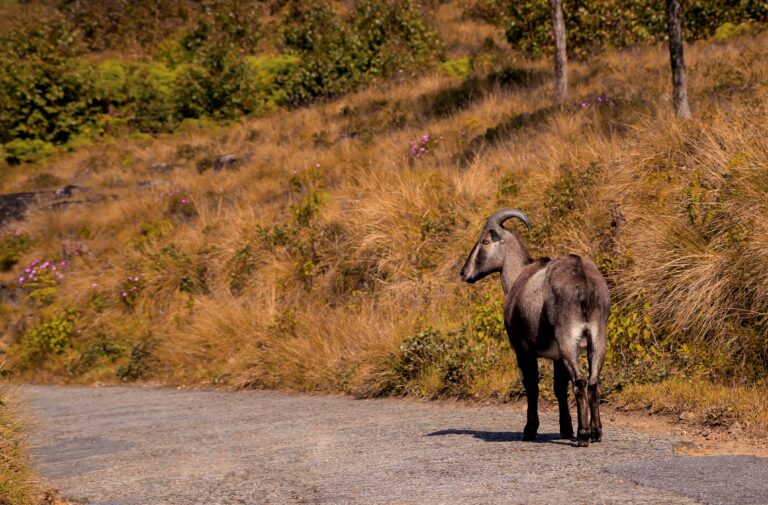
Nilgiri Tahr (Nilgiritragus hylocrius)
Endemic to the Western Ghats, adapted to steep grassland cliffs. A symbol of high-altitude survival.
Indian Gaur (Bos gaurus)
The largest wild bovine, influencing vegetation patterns through heavy grazing.
Sambar Deer (Rusa unicolor)
A primary prey species for large predators, linking plant life to carnivores.
Asian Elephant (Elephas maximus indicus)
A keystone species. Their migration routes shape forests, disperse seeds, and create ecological pathways.
Herbivores determine vegetation structure. Their feeding patterns influence which plants dominate, which regenerate, and which vanish.
The Nilgiris host an extraordinary range of bird species, many of which are endemic to the Western Ghats.
Nilgiri Flycatcher (Eumyias albicaudatus)
A high-altitude specialist, sensitive to habitat change.
Black-and-Orange Flycatcher (Ficedula nigrorufa)
Restricted almost entirely to shola forests.
Malabar Whistling Thrush (Myophonus horsfieldii)
Known for its human-like whistling calls, often heard near streams.
Pollinators
Seed dispersers
Insect population regulators
They are also bioindicators—their presence or absence reflects ecosystem health.
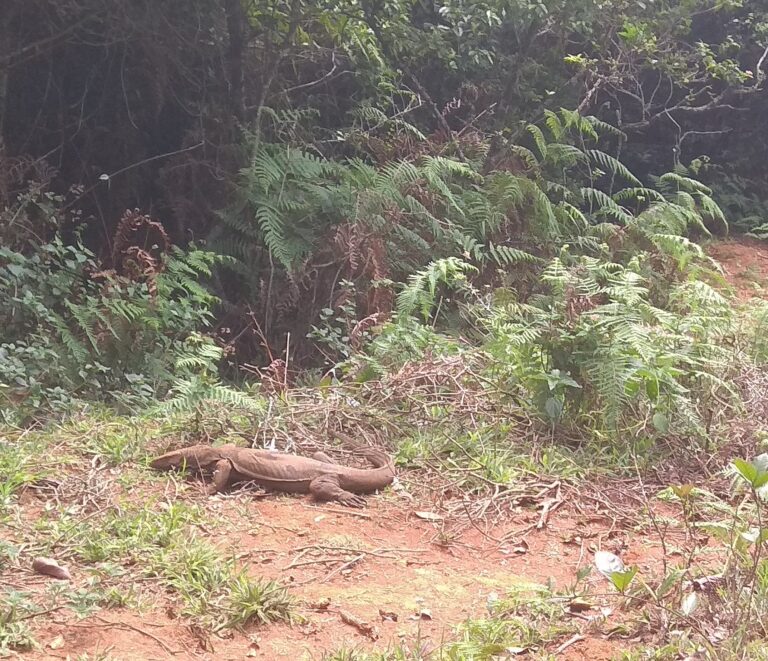
Often overlooked, reptiles and amphibians form a critical part of the Nilgiri ecosystem.
Endemic frogs adapted to shola streams and high-altitude wetlands
Skinks and lizards specialized for forest floor and rocky habitats
Snakes, both venomous and non-venomous, maintaining rodent populations
Amphibians, in particular, are extremely sensitive to environmental changes. Their decline is often the first sign of ecological stress.
The majority of Nilgiri fauna is not visible at first glance. Insects dominate in both numbers and ecological impact.
Pollination of flowering plants
Decomposition and nutrient cycling
Serving as the base of food chains
Without insects, the entire system collapses—plants fail to reproduce, soil fertility declines, and higher trophic levels starve.
As human settlements expand into forest edges, interactions between humans and wildlife are increasing.
Elephant migration routes intersecting with farms
Leopards entering peri-urban areas
Habitat fragmentation due to roads and plantations
This is not just conflict—it is overlap of territory. Wildlife is not encroaching; it is being compressed.
Climate change is not just altering habitats—it is changing animal behavior.
Altered migration patterns of elephants
Shifts in predator-prey dynamics
Reduced breeding success in sensitive species
Fauna in the Nilgiris are adapted to stable conditions. Rapid changes create mismatches in timing—food availability, breeding cycles, and survival rates.
Conservation in the Nilgiris cannot be limited to protected areas. Wildlife does not recognize boundaries.
Maintaining wildlife corridors
Reducing human-wildlife conflict through planning
Scientific monitoring of endangered species
Integrating local communities into conservation efforts
Preservation here is not about freezing nature in time—it is about maintaining functional ecosystems.
The Nilgiris are not defined by their flora or fauna alone, but by the interdependence between them. The forests regulate water, the grasslands stabilize climate, the herbivores shape vegetation, and the predators enforce balance. Every layer—plant, animal, soil, and climate—is tightly interwoven into a system that functions with precision.
This is what makes the Nilgiris extraordinary: not just biodiversity, but functional biodiversity—a system where every component has a role, and no role is expendable.
But this balance is not permanent. It is maintained under pressure—by climate stability, by intact habitats, and by minimal disruption. Invasive species, habitat fragmentation, and climate change are not isolated threats; they are forces that weaken the connections holding this system together.
To understand the Nilgiris is to recognize that conservation here is not about protecting individual species—it is about preserving relationships. Once those relationships break, restoration becomes exponentially harder, and in some cases, impossible.
The “Blue Mountains” are not just a landscape. They are a living system of equilibrium.
And like all systems built on balance, their survival depends on how carefully that balance is maintained.